Polycrisis is not a threat. It is a geopolitical opening. In this opening address, the speaker unveils the strategic blueprint behind this year’s agenda, moving beyond crisis management to a new operating model for Permanent Volatility. The address argues that the defining question for enterprises today is not how to survive disruption, but how to build organizations that are structurally designed to thrive within it.India should pursue supply chain sovereignty as a foreign policy instrument, not just an economic one. The session will provide a comprehensive pulse-check on India’s Infrastructure & Logistics landscape, examining how the nation can leverage its Viksit Bharat infrastructure and “China+2” positioning to replace an outdated global gameplan with a resilient, AI-orchestrated value chain. It will also explore how technology is emerging as the permanent enabler in solving challenges that are no longer episodic, but chronic.
Key Takeaway: Gain a visionary roadmap for steering the “triple threat” of geopolitical shifts, trade volatility, and carbon mandates. Understand how enterprises can harness technology as the foundational layer for operating in a world of Permanent Volatility, setting the tone for two days of reimagining India as the world’s primary resilience anchor.

This address explores the intersection of corporate operational excellence and civic duty, framing the supply chain as a critical pillar of India’s economic sovereignty. It calls on leaders to view logistics not just as a business function, but as a national responsibility essential to the Republic’s growth and resilience.

As manufacturing and supply chains evolve in response to automation, AI, and changing market demands, industrial infrastructure is emerging as a critical business enabler rather than just a physical asset. This session will explore how organizations are moving beyond traditional warehousing and manufacturing facilities towards integrated, customer-centric industrial ecosystems that enhance operational efficiency, scalability, resilience and growth. The discussion will examine the shift from “space” to “solutions” and how future-ready infrastructure is helping businesses across sectors build more agile, connected and competitive supply chains.

This session will explore how India is reshaping its trade architecture through strategic FTAs, emerging export corridors, and shifting global trade routes. It will examine how these developments are redefining market access, competitiveness, and India’s position in global commerce.
Key Takeaway: Insights into leveraging evolving trade frameworks and corridors to unlock new growth and global market opportunities.

Report Brief by Knowledge Partner – PwC India
As global businesses face rising geopolitical tensions, shifting trade routes, regulatory changes, and rapid advances in AI and automation, CEOs are increasingly challenged to manage two powerful forces at the same time. This discussion explores whether organizations can afford to prioritize one over the other—or whether success now depends on building capabilities to navigate both simultaneously.
Key Discussion Points:








This panel will explore whether the growing disruptions across global trade, geopolitics, climate, and infrastructure are India’s biggest business risk or a defining opportunity to transform supply chains at scale and pace. The discussion will focus on how organisations are building agile, resilient, technology-led, and future-ready supply chain ecosystems to drive competitiveness and long-term growth.
Talking Points:
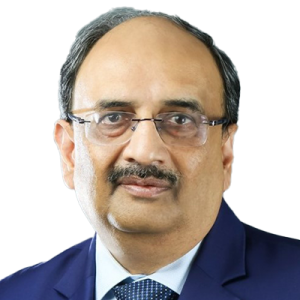
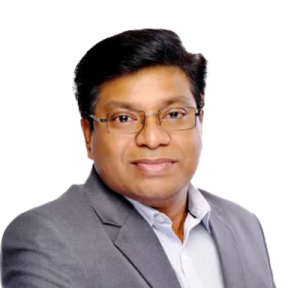







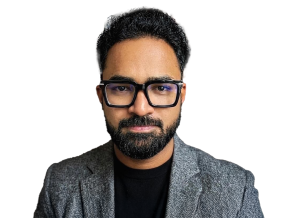
This session examines the transition from mere automation to Agentic AI, where autonomous systems and humans co-create a self-healing, responsive supply chain. It focuses on the leadership and cultural shifts required to manage a workforce where AI acts as a strategic decision-making partner while also looking at challenges of developing talent to operate such facilities that could host advanced tech-supported logistics.
Talking Points:






This session explores the transition to high-spec Grade-A warehousing, focusing on how advanced automation solutions can integrate with real estate infrastructure to maximize cubic capacity across the entire value chain, including national, regional, zonal, and in-city hubs. It examines how these modern assets are being strategically scaled across large clusters developing alongside freight infrastructure (ports, road, and rail) to facilitate India’s manufacturing-led growth and $5 trillion economic target.
Talking Points:



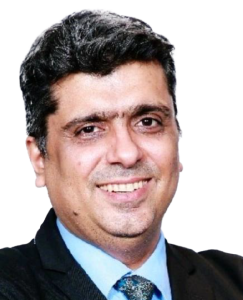


A high-impact tribute video showcasing how supply chains drive the world, featuring fast cuts, dynamic visuals, and a dramatic voiceover.
ET Edge
A candid conversation with the SCM Awards jury as they share what stood out during the evaluation process, along with the innovations, mindsets, and models that are setting new benchmarks in the industry.





This address explores the intersection of corporate operational excellence and civic duty, framing the supply chain as a critical pillar of India’s economic sovereignty. It calls on leaders to view logistics not just as a business function, but as a national responsibility essential to the Republic’s growth and resilience.
This address explores the intersection of corporate operational excellence and civic duty, framing the supply chain as a critical pillar of India’s economic sovereignty. It calls on leaders to view logistics not just as a business function, but as a national responsibility essential to the Republic’s growth and resilience.
As climate change intensifies and geopolitical tensions continue to disrupt global trade, ensuring food security has become a strategic imperative. This keynote will explore how governments and businesses can build resilient, sustainable, and technology-driven food systems that can withstand supply shocks, safeguard agricultural productivity, and ensure equitable access to food while adapting to evolving policy and market dynamics.
This topic explores how FMCG and agri product companies are moving beyond traditional forecasting to real-time demand sensing using AI/ML. It focuses on using high-frequency data like sales, weather, and channel signals to predict demand with greater precision. The shift extends further into demand shaping, where organisations actively influence demand through pricing, promotions, and distribution strategies.
Talking Points:









This session will explore why the long-standing focus on cost optimisation is no longer sustainable in today’s volatile and complex supply chain environment. It will examine what comes next, prioritising resilience, agility, sustainability, and value creation over lowest cost.
Talking Points:






India’s dairy cooperative model is one of the world’s most remarkable supply chain stories—built from the grassroots up, connecting millions of farmers to billions of consumers. Yet as India’s food economy accelerates toward quick commerce, modern retail, and global export ambitions, the infrastructure beneath it is being stress-tested like never before. This address draws on NDDB’s unparalleled vantage point across India’s agri and dairy ecosystem to make a compelling case for what the next generation of India’s food supply chain must look like—more connected, colder, and far more resilient.
Talking Points:

China controls the upstream API supply chain. West Asia controls the energy and petrochemical inputs that feed it. Together, they represent a double chokehold on India’s pharmaceutical manufacturing capability that no single policy initiative has yet fully addressed. This session is designed to address both pressures from operational experience and explore what India should do next.
Key Takeaway: Understand how to reduce critical dependencies and build a more self-reliant, resilient pharma supply chain through strategic diversification and policy-aligned action.

The manufacturing industry is under pressure to deliver on two non-negotiable priorities simultaneously: achieving sustainability and ensuring uninterrupted patient safety. As companies work towards decarbonising operations, reducing emissions, and meeting increasingly stringent ESG expectations, they cannot compromise on product integrity, compliance, or supply continuity. This discussion will explore how technology, data, and resilient operating models are enabling pharmaceutical supply chains to become both greener and more precise, building green supply chains without compromising product quality and patient safety.
Talking Points:





India’s healthcare demand patterns are among the most complex in the world. Seasonal disease spikes, geographic dispersion, income heterogeneity, and the coexistence of branded and generic markets create a demand forecasting challenge that no standard supply chain analytics tool was designed to solve. Panellists will discuss how they are using data, AI, and demand sensing to build supply chains that are genuinely responsive to India’s healthcare demand reality, rather than the global demand templates their systems were built on.
Talking Points:




The chemical industry is navigating a uniquely complex transition, where feedstock volatility, energy intensity, regulatory pressure, and margin sensitivity are all converging at the same time. Unlike most sectors, decarbonisation in chemicals is not a parallel initiative—it directly impacts reaction processes, plant uptime, formulation stability, safety standards, and global customer approvals. This panel brings together senior leaders from chemical manufacturing, specialty chemicals, and global supply planning to discuss how organisations are re-engineering operations while maintaining yield, safety, and global competitiveness.
Talking Points:


As consumer expectations shift from next-day to near-instant delivery, supply chains are being redesigned around hyperlocal fulfilment, dark stores, and real-time inventory visibility. This session explores how brands, retailers, and logistics providers are balancing speed, profitability, and operational efficiency while building the next generation of last-mile delivery networks.
Talking Points:



*The agenda is work in progress and subject to change


Data shows that while global trade volumes are fluctuating, the value of goods moving through Indian air corridors is at an all-time high. This session emphasizes that the industry is no longer just “carrying boxes”; it is “enabling high-value missions” for Global India.
Key Takeaway: Understand how scaling air cargo infrastructure and innovation can position India as a hub for high-value, time-sensitive global trade.

This session explores how virtual replicas of end-to-end networks are evolving from experimental tools into a strategic safeguard, enabling Indian firms to simulate “what-if” geopolitical and climate scenarios in real time. It highlights the shift from reactive logistics to a proactive, stress-tested model that ensures business continuity despite the uncertainties shaping the 2026 market landscape.
Talking Points:


This topic examines the trade-offs between cost, speed, and service levels in India’s last-mile delivery networks. It focuses on how e-commerce players can optimise fulfilment models to achieve scale without eroding margins.
Talking Points:






Moderator:
Sumit Agarwal Managing Director, Supply Chain & Operations, PwC India

This topic addresses the 2026 shift from analog chip shortages to a scarcity of high-end DRAM (Dynamic Random Access Memory) and AI processors, driven by the global competition for computing power. It explores how automotive CSCOs are navigating 70–100% price hikes and the need for “quick redesign” cycles to ensure that software-defined vehicles remain producible amid AI-sector demand. This session focuses on the strategic decoupling of automotive silicon needs from volatile consumer-tech cycles to secure long-term production stability.
Talking Points:


This topic addresses the critical need for the heavy engineering sector to move beyond its reliance on foreign-sourced precision components, specialized alloys, and long-lead spares. It explores strategic levers such as deep-tier supplier mapping and industrial-scale 3D printing for critical parts to insulate project timelines from geopolitical shocks. This session focuses on transitioning from a “buyer” mindset to a “partner” model, fostering domestic innovation to secure India’s industrial sovereignty.
Talking Points:




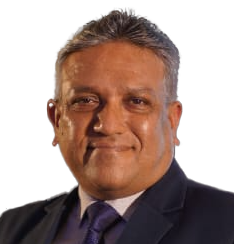

Supply chains are currently migrating into Global Business Services (GBS), merging with Finance, HR, and IT. This keynote focuses on the “Bionic” model, where human intuition and AI agents collaborate to deliver a frictionless end-to-end journey.
Key Takeaway: Understand how integrating AI with human decision-making can create a seamless, end-to-end supply chain that drives both superior experience and performance.
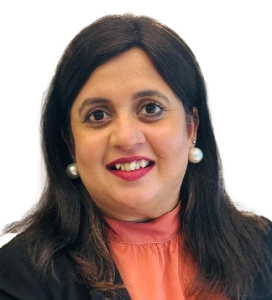
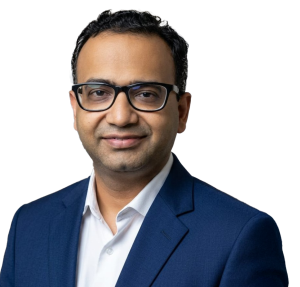
FMCD and manufacturing leaders face a core tension—localisation mandates versus the superior cost, quality, and availability of global components. This panel will examine real trade-offs, identify what’s truly localisation-ready, and discuss how to bridge the gap.
Talking Points:






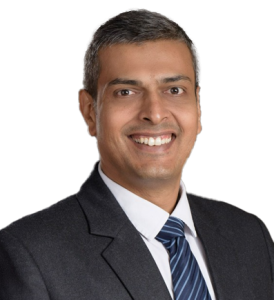
Talking points:
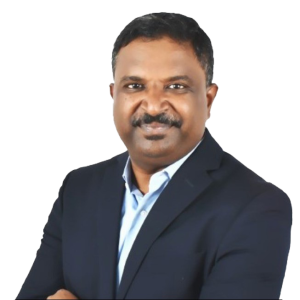
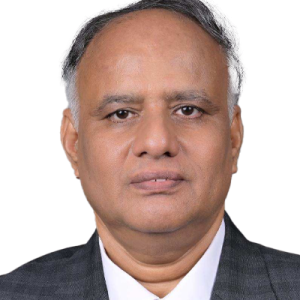
Vijendar Rao, Head – Procurement, Supply Chain & Operations, Maccaferri India


*The agenda is work in progress and subject to change